September 24, 2026
A cosy corner should be the best seat in the house: low light, soft edges, somewhere your shoulders drop the moment you sit down. It is also one of the easiest areas of a home to get subtly wrong, because the mistakes are rarely dramatic. Nothing looks broken. The corner just feels flat, or chilly, or faintly like a waiting room, and it is hard to say exactly why.
The reassuring part is that almost every unhappy snug comes down to the same handful of decisions. Fix those and the corner tends to fall into place without a full redecoration.
Over-lighting turns a snug into a showroom
The most common mistake is letting a bright ceiling light do all the work. Overhead light falls from the wrong angle, casting shadows under the brow and flattening the texture of wool, velvet and linen. It also makes a small corner feel like an office at nine in the morning rather than a place to sink into at seven in the evening.
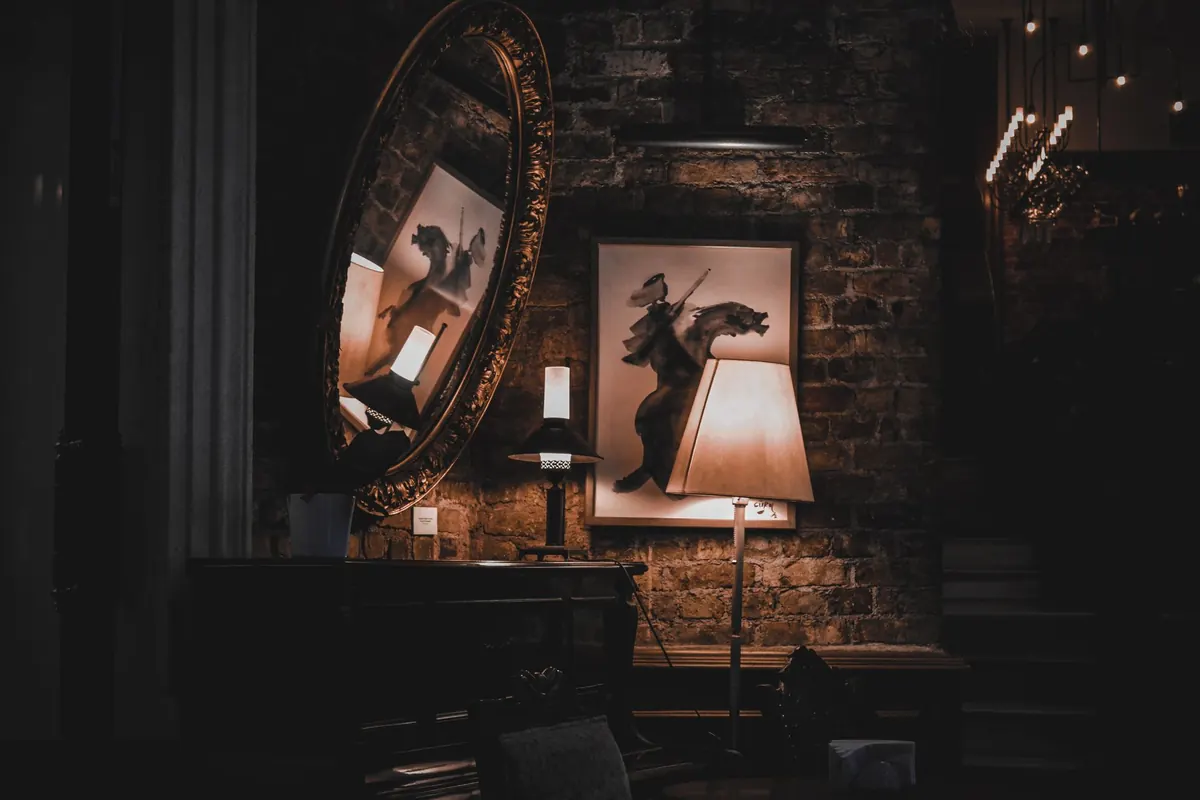
Turn the ceiling light off and build the light in layers at three different heights instead: a floor lamp standing behind or beside the chair, a table lamp at seated eye level, and something low and small — a candle, a little accent lamp on a shelf. Warm bulbs around 2700K suit a snug far better than cool white ones, which pull a bluish cast over wood and skin alike.
A few details make a real difference. Linen or cotton slub shades diffuse light gently; bare bulbs and shiny metallic shades throw glare. A dimmable lamp is worth hunting for. And put the switch within reach of the chair, whether that means an inline switch on the cable or a smart plug, so you are not getting up to turn a lamp off the moment you have settled.
The rug is doing much less work than you think
An undersized rug is the quiet killer of a cosy corner. A square just big enough for the chair looks like a bath mat. A rug that catches only the front two legs makes the chair appear to be falling off an edge. The eye reads the awkward gap before it reads anything else.
As a working rule, the rug should extend at least 40–50cm beyond the front legs of the seating, with the chair sitting comfortably on it in its usual position. In practice that often means roughly 1.2 × 1.7m for a single armchair and around 1.6 × 2.3m for a two-seater. Measure the floor with painter's tape or newspaper before you buy anything; it is far easier to move tape than to return a rug.
Thickness matters too. A thin flatweave on bare floorboards looks lovely but feels cold underfoot. An underlay helps, and so does layering: a large jute rug underneath with a smaller wool one on top adds warmth and texture at once. If your corner already sits on carpet, you can skip the rug entirely — just bring the softness in through a footstool or a heavier throw.
Clutter creep: when cosy becomes crowded
Cosy corners collect things. A candle here, a stack of paperbacks there, one more cushion, a basket, a plant. None of it is wrong on its own, but together it reads as scattered rather than inviting. Warmth comes from texture, not quantity.
Try these adjustments:
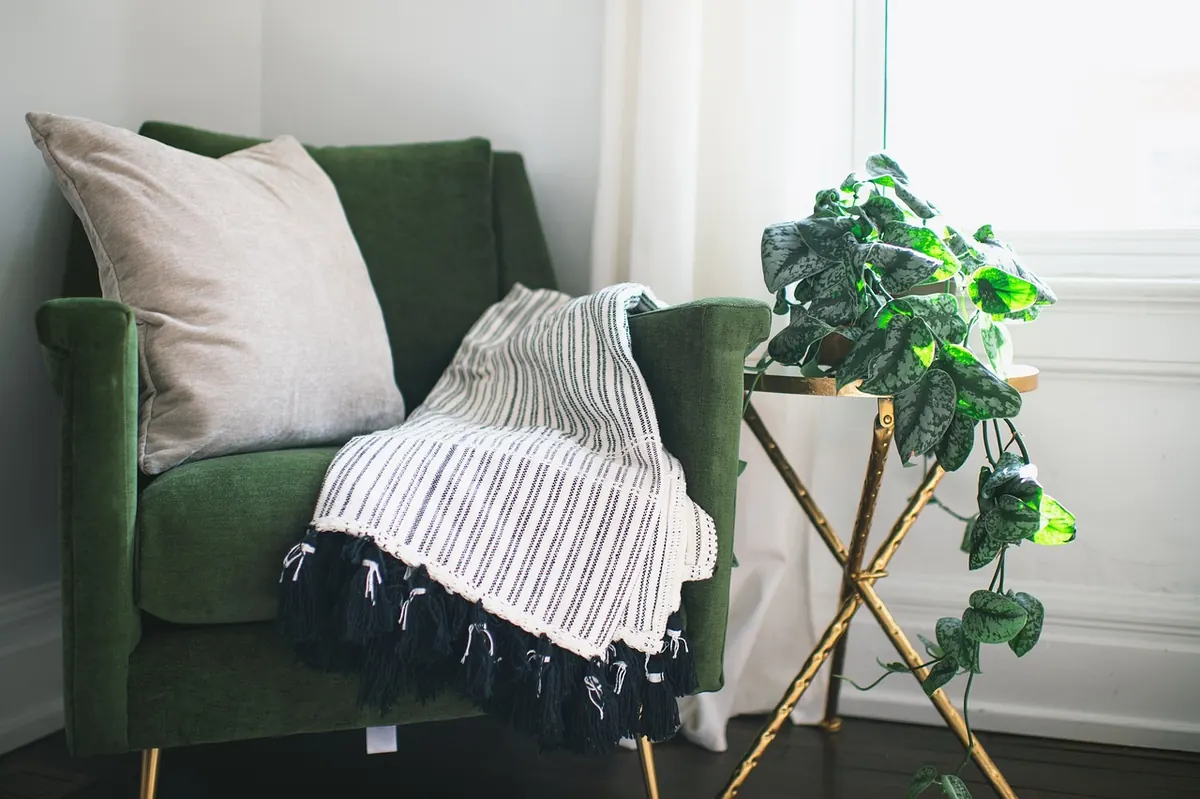
- One throw, folded over the arm or back of the chair — not three draped and pooling on the floor.
- Two or three cushions, mixed in size and fabric. Five turns a seat into a bed.
- A single tray for small things — mug, glasses, candle — so they read as one considered object rather than six stray ones.
- Books in one stack of four or fewer, or on a shelf. Towers on the floor look temporary, as though the room is mid-move.
- One plant, and only if the corner gives it enough light to actually thrive.
Leave a bare patch of surface somewhere. Empty space is what makes the objects you have chosen look deliberate.
Cold colours and the wrong white light
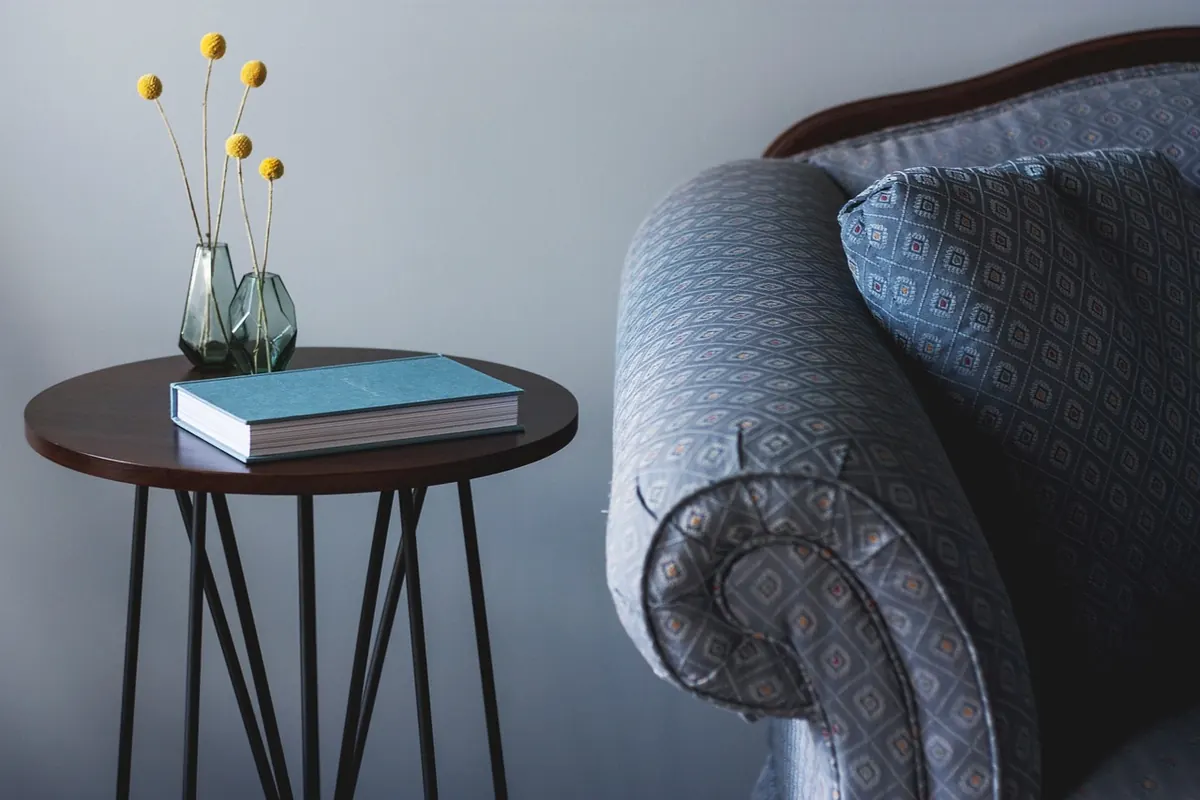
A blue-based grey wall, a cool white bulb, a chrome floor lamp and a pale grey armchair add up to a corner that never quite warms up, however many candles you light. You do not need to repaint to fix this. Warm the scheme from the inside out: oak or walnut rather than pale ash, brass or aged bronze rather than chrome, oatmeal, camel, rust, terracotta, deep green. Wool, bouclé and brushed cotton carry warmth better than anything slick.
If you are painting, choose a warm off-white with a hint of yellow or red in it, and think twice about the coolest greiges in a corner that gets little daylight. Paint large sample patches and look at them in the morning, in the late afternoon, and under the lamps at night. In a snug, the evening colour is the one that matters most.
Furniture that fights the space — and a corner with no purpose
Right scale, right angle
Measure before you buy. A chair that blocks the walking route or is wedged hard against two walls leaves nowhere for legs and elbows. Keep 45–60cm of clear floor for a walkway past the corner. Angle the chair roughly 30–45 degrees from the wall: it opens up the space, gives you a natural spot for a slim side table behind it, and looks placed rather than pushed. If the chair is oversized for the corner, the whole area will feel crowded even when it is empty of clutter.
Give the corner a job
A corner with no purpose becomes a dumping ground within a fortnight. Decide what happens there — reading, tea, phone calls, knitting, a guitar leaning against the wall — and kit it out for that. A side table big enough for a mug and a book. A lamp within reach. A basket for the blanket. Somewhere to charge a phone, even if it is an extension lead tucked behind a piece of furniture.
Then sit in the chair for ten minutes. Whatever your hands reach for and cannot find, add. Whatever you never touch, take away.
A ten-minute reset
- Turn off the ceiling light and switch on the lamps.
- Stand in the doorway and look at the corner properly. The first thing that bothers you is usually the real problem.
- Remove three things — a cushion, a candle, a stray stack of paper. It will almost certainly feel better.
- Check the rug edge. If a chair leg hovers over bare floor, pull the rug forward or swap it for something larger.
- Sit down and reach. If the mug or the lamp switch is out of range, add a small table or a smart plug.
Cosy is not the same as full. A snug corner works when it does a few things well: soft, layered light at the right height, something warm underfoot, a seat that fits the space, and a small clear surface for a cup of tea. Get those right and the corner will do the rest.
Photo: Pexels / Pixabay