October 02, 2026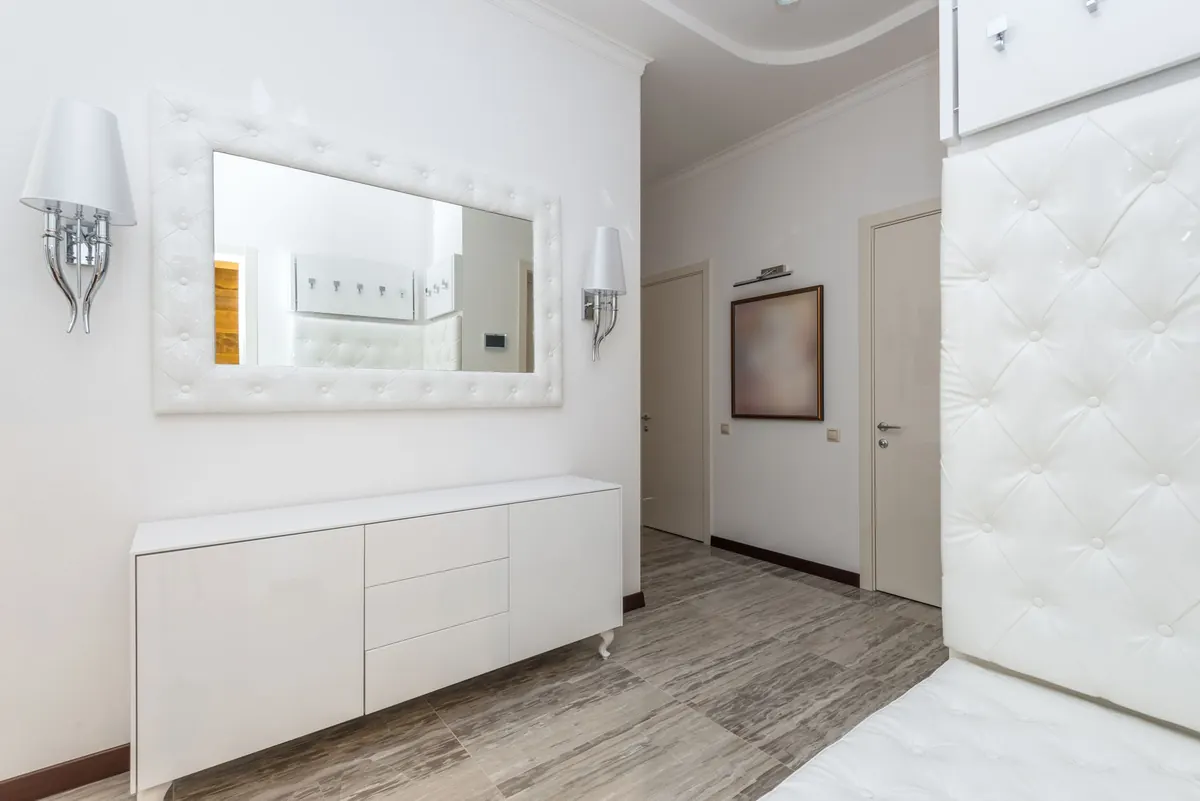
A hallway is asked to do a lot. It swallows coats, shoes, shopping bags, the post and a damp umbrella, usually in a corridor too narrow for two people to pass without a small shuffle. In many UK homes — Victorian terraces, 1930s semis, new-build flats — it is also the first thing you see when you walk in and the last thing you look at on the way out. Which is why it is worth half an hour of proper thought before you buy anything.
Measure Before You Shop
Take a tape measure and note the width of the hall at its narrowest point. That is your real number. Door swings, a radiator, a meter cupboard, the bulkhead under the stairs and a badly placed light switch all narrow it further.
As a working test, you should be able to walk through with a bag in each hand without turning sideways. If you cannot, anything you add needs to sit above waist height or come in at under 25cm deep. Photograph the hall from both ends, empty if possible. Narrow rooms look different through a lens, and a photo will stop you buying something that only fits in your imagination.
Light Does Most of the Work
Most hallways have a small window or none at all, so the lighting is doing the heavy lifting. Layer it rather than relying on one ceiling fitting. A ceiling light as the base, a wall light at shoulder height, and a small lamp on a console or shelf all add depth, and the lower lights are the ones that make the space feel warm rather than institutional.
Swap cool white bulbs for warm white ones. Cool light in a windowless corridor reads as a lift lobby. Paint the walls and ceiling in one light colour, keeping the ceiling the lightest surface in the room — a dark ceiling brings the height down fast. Matt paint suits ceilings; low down, where hands and bags brush past, a wipeable finish earns its keep.
If light is scarce, keep the floor and skirting pale too. Dark flooring under dark walls will shrink a narrow hall, however lovely the samples looked in the shop. And clear the window: blinds bunched to one side, no clutter on the sill.
Mirrors: Position Beats Size
A mirror is the quickest way to make a tight hall feel less pinched, but where you hang it matters more than how big it is. Opposite a window or a light source, it throws daylight back into the room. Opposite the front door, it tends to reflect a dark panel and can give you a jolt at night.
On narrow walls, choose slim frames. A deep, ornate frame steals centimetres exactly where shoulders pass, and a wide mirror in a tight corridor is awkward to use. One generous mirror reads calmer than three small ones, which add visual noise without adding light. A round or arched shape softens all those right angles.
If you have room to stand back, a full-length mirror in the hallway saves the morning trip back to the bedroom. If you do not, hang it on the longest uninterrupted wall instead and keep the floor in front of it clear — a mirror surrounded by clutter reflects clutter.
Runners and Floors
A runner pulls the eye along the hallway, which is helpful in a short one. Choose a runner narrower than the floor so a border of floor shows at each side, and leave a small gap at both ends rather than butting it right up to the skirting. An anti-slip underlay or rug grip is not optional on laminate, tile or engineered wood, especially if anyone in the house is unsteady on their feet.
Pale, low-pile runners bounce light upwards and are easy to shake out. Busy patterns hide scuffs and paw prints; plains show every mark. If you already have fitted carpet wall to wall, adding a runner on top usually looks bulky — a washable mat by the door may be all you need.
Slim Storage That Earns Its Place
Depth is the number that matters. A standard wardrobe is around 60cm deep; you may only have 30cm to spare. Measure the item, not the gap, and buy for the narrowest point of the hall rather than the widest.
- A shallow shoe cabinet, roughly 20–25cm deep, with a mirror above it to double the light
- Hooks at adult shoulder height, plus a lower row children can actually reach
- One shelf with a shallow basket for keys, post, sunglasses and the dog lead
- A wall-mounted shelf or slim console instead of a table with legs you have to walk around
- A tall, narrow cupboard 30–40cm wide, if one wall is clear, to swallow coats, bags and the ironing board
- Over-door hooks on the inside of a cupboard door, never on the front door itself
The general rule: use the wall above waist height for everyday items and keep the floor plane empty. Nothing eats a narrow hallway faster than furniture that reaches out into the walking line.
Make the Landing Zone Work
Hallways get messy because things arrive with nowhere to go. Give each daily item a home within one step of the door: keys in one bowl, post in one basket, dog lead on one hook. Shoes live on a rack, one pair each by the door and the rest elsewhere. Coats too — one or two per person in the hall, the occasional ones upstairs.
If you have 35cm of depth to spare, a bench with storage underneath earns its space, because it gives you somewhere to sit and somewhere to hide the shoes. Deal with the post weekly rather than monthly; junk mail goes straight into recycling on the way past. If a job takes more than five seconds, it will not get done, so keep the system almost absurdly simple.
A Weekend Plan for a Narrow Hall
- Empty it completely. Pile everything in the living room, and look at the space you actually have.
- Sort it: keep what you use weekly, move the rest to a bedroom, cupboard or charity bag.
- Clean, fill old picture holes and touch up the skirting. Paint a tester patch if you are changing colours.
- Paint the walls and ceiling in one light shade, and lighten the woodwork if it is currently dark.
- Clean the floor, then lay the runner with grip underneath it.
- Change the bulbs for warm white, and add a wall light or a small lamp if there is a socket nearby.
- Hang the mirror last, then fit hooks and a shelf. Live with it for a week before buying anything else.
A narrow hallway rarely needs more. It needs fewer things, in the right places, doing their job in decent light — and a mirror hung where it can catch what daylight you have.
Photo: Max Vakhtbovych / Pexels